
Strong Output, Slower Hiring: A Look at Recent Economic Trends

submitted by Uric Dufrene, Ph.D., Sanders Chair in Business, Indiana University Southeast
 

The current macroeconomy has been described by some as a “no hire–no fire” economy. Gross domestic product (GDP), a measure of the market value of goods and services produced, has been strong, with third-quarter estimates now at 4.4%. In the most recent quarter, growth was driven primarily by a combination of the resilient consumer, and a reversal of the import surge observed during the first quarter of the year.

Despite the strong growth, comparable gains have not followed in the labor market. Payroll growth has slowed significantly from last year, and hiring activity has declined. Layoffs, however, have not surged. In fact, layoffs remain at historically low levels and well below arecession threshold of roughly 350,000 initial claims per week. Employers, it seems, are holding onto workers, but are increasingly reluctant to add new ones.

Closer to home, we are observing similar patterns across the State of Indiana. The latest state GDP report shows robust 5.1% growth in the third quarter, the strongest quarterly growth since late 2023. Yet job gains for both 2024 and 2025 are running at the slowest pace of the past decade, excluding the sharp losses associated with the COVID recession. Year over year, Indiana payroll employment is ahead by roughly 19,000 jobs, below both pre-pandemic and post-pandemic averages of approximately 27,000 and 38,000 jobs, respectively.

Interestingly, 2019 produced the third-weakest year for job growth over the past decade, with payrolls rising by only about 20,000 jobs. That year followed the implementation of tariffs in 2018, including those on steel and aluminum, an important point of reference for today.

Nearly all the jobs added over the past year in Indiana came from healthcare, which accounted for roughly 17,000 of the 19,000 net jobs gained. Other notable gains came from professional and business services, which added about 9,000 jobs, and construction, which contributed another 3,000.

Indiana remains a national hub for both manufacturing and logistics. Both sectors are particularly sensitive to trade policy, and both struggled in 2025. Transportation and warehousing shed approximately 4,000 jobs over the year, while manufacturing employment was essentially flat. For manufacturing, however, 2025 represented something of a stabilization year following losses of roughly 14,000 and 10,000 jobs in the prior two years.

Turning to Louisville Metro, the latest data show that payroll growth has modestly accelerated in the second half of the year. While the most recent figures show a net gain of about 2,000 jobs over the year, average monthly gains in the second half exceeded those seen earlier in the year. Unlike Indiana, healthcare is no longer the dominant job-creation sector in Louisville Metro, adding fewer than 1,000 jobs in 2025. Last year, Louisville healthcare drove a significant component of overall job growth.

Like Indiana, Louisville is both a manufacturing region and a logistics hub, and both sectors experienced job losses over the past year. Manufacturing employment declined only slightly, but transportation and warehousing shed approximately 2,000 jobs. Construction, by contrast, added more than 2,000 jobs.

Taken together, 2025 stands out as one of the slowest years for job growth for both Indiana and Louisville Metro. Higher interest rates initially weighed on manufacturing activity beginning in 2022. More recently, however, the impact of tariffs appears to be a growing headwind for both the Indiana economy and the Louisville Metro area. Tariff-sensitive sectors such as manufacturing and transportation and warehousing have borne the brunt of these effects. With GDP growth running strong and consumer spending remaining resilient, tariffs increasingly stand out as a key factor holding back job growth.
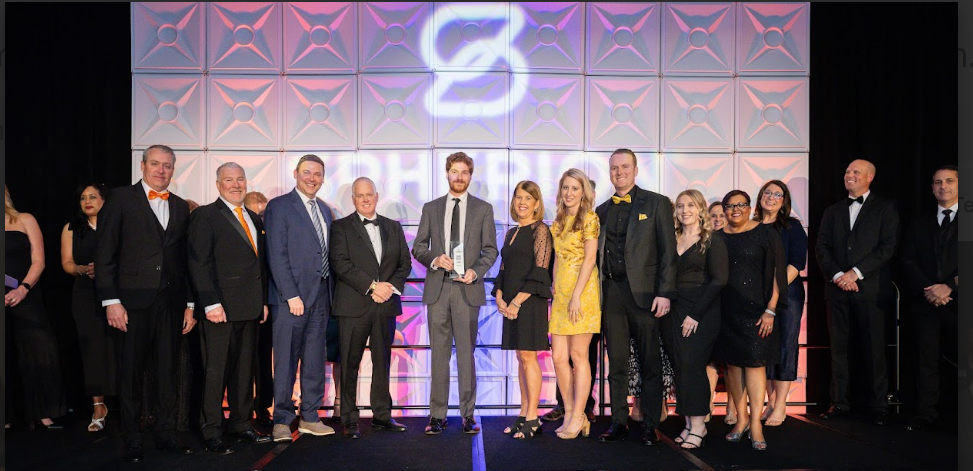
Spherion Jeffersonville’s Spencer Geer Helps Lead General Staffing Office of the Year Win

Local Staffing and Recruiting Business Nationally Recognized for Record Growth and Workforce Impact

JEFFERSONVILLE, Ind.Spherion Staffing and Recruiting (Spherion) in Jeffersonville announced that it has been named the franchise company’s General Staffing Office of the Year. Spencer Geer, branch manager, played a key role in the office’s record-setting growth and continued impact in connecting local employers with top talent.

“During our second full year in Jeffersonville, we focused on the fundamentals really well,” said Geer. “We showed up for our clients, responded quickly, and made sure we were placing the right people in the right roles. The growth followed because of the trust we’ve built with local businesses and candidates. This recognition validates the work our team is doing every day in the Jeffersonville market.

Spherion has served the Jeffersonville community since opening its office in 2022. Geer joined the team in 2023 as a recruiter and account manager and was promoted to branch manager in 2025, where he oversees day-to-day operations. His progression with Spherion reflects both his individual leadership development and the team’s commitment to developing talent from within. Geer enjoys supporting the Jeffersonville community and local employers with trusted staffing and recruiting solutions.

Spherion’s General Staffing Office of the Year award recognizes the location with the highest year-over-year revenue growth nationwide. The Jeffersonville office delivered 511% year-over-year revenue growth, achieved 197% growth in direct hire, and added six new client accounts, while maintaining a 4.9-star Google rating and a strong safety record. These impressive results distinguished the Jeffersonville team among Spherion’s general staffing offices across the country and demonstrate the persistence and dedication of Geer’s local team.

“Watching this team grow since our opening has been incredibly rewarding,” said Brock Wicker, franchise owner of Spherion Jeffersonville. “Spencer leads with care, consistency, and a strong sense of responsibility to both our internal team and clients and candidates. What matters most to me is the culture this team has built, the way they support one another, and the community they serve.”

Each Spherion office enriches its community by connecting and facilitating employment opportunities every day—and when successful, the office and its investments flow back into the neighborhoods it serves. The power of Spherion is in its local roots.

To learn more about Spherion Jeffersonville, visit www.spherion.com/jeffersonville.

About Spherion

Transform your workforce with Spherion Staffing & Recruiting, where local expertise meets national connections. For 80 years, we’ve been strategically helping businesses and job seekers thrive across America. Backed by the world’s most equitable and specialized talent company, our network of independent franchisees brings personalized service to 200+ communities, connecting more than 4,000 businesses with exceptional candidates through temporary, temp-to-hire, direct hire, and on-site hiring solutions. Our commitment to being a premier staffing partner shows through results: Our 4.9/5 national Google review rating and recognition as a Top 10 Staffing Company to Work for by World Staffing Awards, plus inclusion on Franchise Business Review’s Top 200 Franchises and Entrepreneur magazine’s 2026 Franchise 500 list. Partner with Spherion to strengthen your business or transform your career.

CONTACT: Peyton Harvey
All Points Public Relations
pharvey@allpointspr.com

River Ridge Commerce Center Reaches Major Milestone: 20 Million Square Feet of Buildings Developed

Jeffersonville, IN (December 18, 2025)– The River Ridge Development Authority (RRDA) today announced a significant milestone in the continued growth and transformation with the River Ridge Commerce Center surpassing 20 million square feet of developed building space.


The achievement underscores River Ridge’s rapid evolution into one of the premier business and industrial parks in the Midwest—an economic engine supporting thousands of jobs and driving billions in regional investment. Over the past two decades, River Ridge has welcomed a diverse mix of global manufacturers, logistics leaders, and technology firms, all contributing to this latest milestone.


“This is more than a square-footage benchmark—it’s a testament to the vision, collaboration, and strategic investment that have shaped River Ridge into a world-class business destination,” said Marc Hildenbrand, Executive Director of the River Ridge Development Authority. “Surpassing 20 million square feet highlights both the strength of our market and the confidence that major employers place in the Commerce Center. We’re proud of this progress and excited for what comes next.”
River Ridge’s investment in modern infrastructure, roadway expansion, utility enhancements, and workforce-ready development sites has positioned the Commerce Center as a hub for companies seeking long-term growth.


“Every new facility represents jobs, investment, and opportunity for Southern Indiana residents,” Hildenbrand added. “Reaching 20 million square feet is a remarkable milestone.”
For more information about development opportunities at River Ridge Commerce Center, visit the RRDA website https://www.riverridgecc.com/ or contact the development office.


About the River Ridge Development Authority

The River Ridge Development Authority (RRDA) manages the River Ridge Commerce Center, a 6,000-acre business and office park established in 1998. The RRDA’s mission is to generate a positive regional economic impact by managing and sustaining the River Ridge Commerce Center as America’s premier development location. Today, River Ridge is home to more than 80 companies such as Amazon, Meta, Canadian Solar, Collins Aerospace, Medline, and PharmaCord. Onsite employment totaled more than 12,675 in 2024, and the Commerce Center produced a record-breaking economic impact for the region.


Media Contacts:
Wendy Dant Chesser, Chief Director – Corporate Strategy & External Affairs
(812) 285-8979

IU Southeast Business Students Earn Top Honors in RNMKRS Sales Competitions

New Albany, Ind — IU Southeast School of Business students earned top honors in the recent RNMKRS sales competitions. Students in the Personal Persuasion Strategy and Customer Relations Management class participated in the competitions, with most placing in the top 30% in at least one or more of the individual events.

IU Southeast finished first in Role Play and Speed Sell. This is the second time that IU Southeast has finished first in Role Play, and the fifth time in six years in the top two. It is also the second time IU Southeast finished first in Speed Sell. The IU Southeast team has finished in the Top 3 in Speed Sell in each term it has competed. Six out of ten of the top individual scorers in the Pilot Cold Call competition were from IU Southeast.

Carter Crews earned class champion honors and finished in the Top 1% overall in both Speed Sell and Role Play. Crews also finished 6th overall and 4th in the class in the Cold Call competition.

Cassie Walls was the overall champion in Cold Call, only the second IU Southeast student to win a RNMKRS competition. (Carolyn Kannapel was the champion in Role Play for the Fall 2024 competition.) Walls also finished Top 8% in Speed Sell and Top 28% in Role Play.

Other standout finishers included:

  • Sam Boston – Top 1% in Role Play, Top 2% in Speed Sell, and 10th overall in Cold Call
  • Lillie Weber – Top 2% in Role Play, Top 5% in Speed Sell, 2nd overall in Cold Call
  • Kiki Brown – Top 1% in Role Play, Top 2% in Speed Sell, Top 14% in Cold Call

Approximately 40 schools participated in Role Play and Speed Sell, with over 2,000 students participating in the Role Play. Cold Call was a pilot competition in which about 17 schools and 350 students participated. Other schools participating in the various competitions included IU Bloomington, Indiana State University, Boston College, Auburn University, Northern Kentucky University, Northern Illinois University, Bryant University, Purdue University Northwest, West Virginia University, Rollins College, Bowling Green State University, the University of Nebraska at Omaha, and the University of Illinois at Chicago, among others.

For the Role Play competition, students represented Dell Technologies, selling rugged notebook computers to a Texas police department’s IT Manager. The goal is to earn a second appointment to demonstrate the computers and complete the sale.

In Speed Sell, students found themselves on an elevator, pitching themselves for a job interview. They have about 90 seconds to make their case and convince the manager to stay on the elevator to listen to their entire pitch.

In Cold Call, students represented a staffing company Insight Global and made a cold call, to gain a meeting to learn more about the company, and how Insight Global might be a solutions provider for them.

Dr. Chris Cox, professor of the Personal Persuasion Strategy and Customer Relations Management course, says the event is a valuable experience for his students. The ultimate goal is not to win the competitions, Cox says, but to use RNMKRS as a tool to develop sales skills that can be applied in real-world selling scenarios.

“One of the great things about these competitions is that they allow students to develop their skills anytime, anywhere, and all by themselves, without a coach or instructor standing over their shoulder. We want them to develop ‘muscle memory’ for the sales process, so they do not have to think about it; so it comes more naturally. It helps them get down the road in their development of selling skills further and faster.”

Cox says students can role-play on the web or through apps on their phones, getting instant feedback from AI.

“Students can do dozens, even hundreds, of role plays. This kind of repetition is not possible in class, with live human role-plays. The AI characters can be challenging, both because the process itself is difficult to master and because the AI is still developing; it can be frustrating. But these students powered through, and showed a level of commitment, persistence, and problem-solving skills that not only help them overcome technical challenges, but more importantly, help them develop an understanding of the sales process that they can apply in their careers, whether in professional sales or non-sales selling scenarios.”

Students in the course are currently preparing for their final face-to-face role-play in the class. Cox says he is looking forward to seeing them apply what they’ve learned.


###


About IU Southeast: IU Southeast is one of nine campuses of Indiana University. Offering top-quality and nationally accredited programs in education, nursing, business, social sciences, natural sciences, arts and humanities, the scenic 180-acre campus is located less than 15 minutes from downtown Louisville, Kentucky. It currently has over 3,750 students and employs over 360 faculty members. About 400 students live on campus in five fully furnished, lodge-style residence halls. Through an agreement with the Commonwealth of Kentucky, Indiana University Southeast offers in-state tuition to students enrolled from ten counties in the Louisville region, including Bullitt, Hardin, Henry, Jefferson, Meade, Nelson, Oldham, Shelby, Trimble, and Spencer counties and discounted tuition for remaining Kentucky residents through the Indiana Partner Program. For more information, visit https://southeast.iu.edu. IU Southeast is a tobacco-free campus.

Contact: Nancy Jo Trafton

812-941-2676

ntrafton@ius.edu

Indiana American Water Invests $5.7 Million to Keep Life Flowing in Southern Indiana

New Binford Booster Station in New Albany Delivers Stronger Water Pressure, Greater Reliability, and Room for Growth

New Albany, Ind. – December 11, 2025Indiana American Water is completing a $5.7 million investment in its Southern Indiana water system with the construction of the new Binford Booster Station in New Albany, Ind. The state-of-the-art facility will improve water pressure, enhance reliability, and provide capacity to support future development for customers in Floyd and Clark counties.


Families and businesses from Floyd Knobs to Georgetown rely on steady water pressure every time they turn on the tap. However, aging pumps and rolling terrain made it increasingly difficult to maintain a consistent flow, especially during peak demand. In addition to serving local customers, Indiana American Water also sells water to neighboring utilities, including Ramsey Water Company, Borden Tri-County Regional Water District, and Floyds Knobs Water Company, all of which benefit from the new Binford Booster Station.


When it enters service before year-end, the Binford Booster Station will deliver nearly 2,400 gallons per minute of pumping capacity. It features energy-efficient, variable-speed drives that automatically adjust to real-time demand—critical during peak usage periods. Built-in redundancy ensures maintenance can be performed without disrupting service.


This project is part of $9 million in 2025 system upgrades, which also include replacing 16 water mains across multiple counties and targeted improvements to regional wellfields.


“Reliable water service is critical for public safety and economic growth. This investment not only strengthens our system today but also gives our communities the confidence to keep building for the future. By upgrading aging infrastructure and adding capacity, we’re helping to ensure that families, businesses, and first responders have the water they need—when they need it,” said Brittany Montgomery, Southern District Manager, Indiana American Water.


The new Binford Booster Station will deliver a range of improvements for customers and communities. Local first responders benefit from better fire-flow capability when water is needed most, while added capacity supports new housing and commercial development. Built-in redundancy minimizes service disruptions, and a broad pumping range paired with improved efficiency helps meet customer demands more effectively.


Indiana American Water extends its gratitude to the City of New Albany for their support with permitting, as well as to the many contractors, engineers, and design firms that made this project possible—including HTNB Corporation, EFI-Solutions, Dan Cristiani Construction, and American Structurepoint.


In its Southern Indiana Operations, Indiana American Water invests tens of millions of dollars annually across Southern Indiana in communities including New Albany, Jeffersonville, Clarksville, Georgetown, Charlestown, portions of Sellersburg and Borden, and unincorporated Floyd and Clark counties. These investments include replacing aging mains, upgrading treatment technology, and protecting local water sources. From source to tap, our team is on call 24/7 so customers can focus on what matters most.

About American Water American Water (NYSE: AWK) is the largest regulated water and wastewater utility company in the United States. With a history dating back to 1886, We Keep Life Flowing® by providing safe, clean, reliable, and affordable drinking water and wastewater services to more than 14 million people with regulated operations in 14 states and on 18 military installations. American Water’s 6,700 talented professionals leverage their significant expertise and the company’s national size and scale to achieve excellent outcomes for the benefit of customers, employees, investors, and other stakeholders. For more information, visit amwater.com and join American Water on LinkedIn, Facebook, X and Instagram.


About Indiana American Water

Indiana American Water, a subsidiary of American Water, is the largest regulated water utility in the state, providing safe, clean, reliable, and affordable water and wastewater services to approximately 1.5 million people. For more information, visit amwater.com/inaw and join Indiana American Water on LinkedIn, Facebook, X and Instagram.


Editor’s Note: Image is of inside the new Binford Booster Station, a modular building that will be connected to existing water mains.


Media Contact:

Joel Reuter

External Affairs Manager

Indiana American Water

P: (317) 885-2434

E: joel.reuter@amwater.com

Louisville Muhammad Ali International Airport Launches New, Improved Parking Reservation Experience with AeroParker

New Partnership Enhances the Traveler Journey While Unlocking Operational Efficiency for the Airport

Louisville, KY (December 17, 2025) – The Louisville Muhammad Ali International Airport (SDF) is today announcing a new partnership with AeroParker, part of Metropolis’ fully integrated airport mobility platform, to expand its existing end-to end parking and reservation services. This will deliver a more seamless, streamlined journey for passengers, just in time for the busy holiday travel season.

“Passenger traffic for this year’s holiday travel is up about 7% in scheduled capacity compared to last year with more than 104,000 departing seats scheduled from December 21 through January 4,” said Dan Mann, Executive Director of the Louisville Regional Airport Authority, which owns and operates SDF. “Travelers will be able to take advantage of our new partnership with AeroParker to help simplify
the travel journey and offer even more ease and flexibility when determining their parking options.”

AeroParker enables customers to book parking up to four hours before arrival at one of SDF’s five convenient self-parking options. Travelers can now manage and amend their own reservations directly online, including changes due to flight delays or cancellations – a key feature not previously available. Two booking options are available: non-flex (no cancellation protection) and flex (cancellation protection for an additional $1 fee). To take advantage of this new parking experience and reserve a space ahead of travel at SDF, passengers can visit SDFPark.com.

The new reservation system is applicable to the five self-park options at SDF – the Garage, Surface Lot, Premier East Lot, Premier West Lot and the Express Shuttle Lot. Since 2020, more than $8 million has been invested in new or expanded parking options at the airport through the SDF Next Program, a robust capital improvement initiative for both the terminal and airfield. With these improvements, overall parking capacity has increased by 23% during this time.

With the launch of AeroParker’s parking reservation platform, SDF – which saw more than 4.8 million passengers in 2024 – now joins an exclusive group of airports and transportation hubs that offer travelers a smoother, more intuitive digital parking experience. AeroParker is trusted by more than 30 leading airports across the U.S., including San Francisco International Airport, Charlotte Douglas International Airport, and the Port Authority of New York & New Jersey.

With AeroParker and Metropolis now fully integrated as one company, holiday travelers at SDF will benefit from the airport’s commitment to delivering modern, traveler-first digital services – from reserving a parking space online to seamless entry and exiting of the parking facilities. Metropolis is already partnered with more than 75 U.S. airports and its seamless checkout-free technology is rolling out across airports, including San Antonio International, and expanding nationwide. This integration creates new opportunities for SDF to serve its passengers and enhance operational efficiency across its parking assets.

###

About Louisville Muhammad Ali International Airport (SDF)
Owned and operated by the Louisville Regional Airport Authority, the Louisville Muhammad Ali International Airport (SDF) is the state’s premier airport, serving more Kentuckians annually than any other airport in the Commonwealth. Eight commercial passenger airlines offer nonstop service to more than 35 nonstop destinations from Louisville. SDF is home to UPS Worldport, moving millions of tons of product each year, making it the 3rd busiest cargo airport in North America and 5th in the world. Aviation is an economic powerhouse for the
region that generates $12.8 billion in economic impact every year. One in 8 jobs is generated by SDF and Bowman Field and their aviation partners. Visit www.FlyLouisville.com to learn more.

Natalie Chaudoin
(502) 475-8084 cell
Natalie.Chaudoin@FlyLouisville.com

About Metropolis
Metropolis is an artificial intelligence company for the real world. Its Computer Vision platform eliminates friction from daily life, powers checkout-free payments and unlocks seamless, predictive and personalized experiences everywhere consumers transact. Metropolis is
pioneering the Recognition Economy, transforming physical spaces into responsive environments with an Intelligence Layer that understands presence, anticipates needs and personalizes moments. Leveraging AI, Metropolis’ platform understands, adapts and responds
to Members in real time. Adding more than 1 million Members each month, it is one of the fastest-growing technology companies in the United States and envisions a future where transacting in the real world is even easier than online. Following its take-private acquisition of
SP+, Metropolis is now the largest parking network in the United States, with 4,200+ locations and operations in 40 countries worldwide. Its proprietary AI technology touches 50 million customers and processes over $5 billion in payments annually.

Lizzy Levitan
metropolis@hunt-gather.com

A Growing Economy, a Stalled National Labor Market

submitted by Uric Dufrene, Ph.D., Sanders Chair in Business, Indiana University Southeast

The “dot-com” recession of the early 2000s and the Great Recession of 2007 to 2009 have both been described as “jobless recoveries.” In each case, economic growth, as measured by GDP, returned to positive territory as the recession ended, but job growth lagged for years afterward.

During the 2001 tech-driven recession, employment continued to decline through mid-2003, even though the economy had already resumed growth. Following the housing-led Great Recession, employment did not return to its pre-crisis level until 2014, nearly five years after the recession officially ended.

Fast forward to today.

We are now approaching the one-year anniversary of so-called “Liberation Day,” when a sweeping and unprecedented increase in taxes on consumption — in the form of tariffs — was rolled out with the stated goal of “liberating” the American worker and bringing jobs back to the United States, particularly in manufacturing. At the time, press accounts highlighted optimistic projections from officials, who spoke confidently about sizable job gains in the second half of 2025 driven by reshoring and small-business hiring.

Instead, as we enter early 2026, the U.S. economy appears to be on the verge of something different — a jobless boom.

Why jobless, and why a boom?

Start with the labor market. Payroll growth slowed dramatically in the second half of 2025, nearly grinding to a halt. On a year-over-year basis, job growth remained below 1 percent throughout the second half of the year, with the most recent report showing growth of just 0.4 percent.

To put that in historical context, we must go all the way back to the early 1980s to find a similar combination of sub-1 percent job growth occurring outside of an active recession. Even then, that period was sandwiched between two back-to-back recessions. Outside of that episode, year-over-year job growth below 1 percent has almost always been associated with the lead-up to a recession, the recession itself, or the immediate aftermath.

And yet, we are not currently in a recession.

GDP growth did turn negative in the first quarter of 2025, but for a very specific reason. Faced with the looming implementation of tariffs, businesses and consumers rushed to stockpile imported goods. Because imports subtract from GDP, that surge temporarily pulled growth into negative territory. Once that front-loading faded in subsequent quarters, GDP growth rebounded.

In fact, growth came roaring back. Heavy investment in artificial intelligence and data-center infrastructure, along with resilient consumer spending, pushed third-quarter GDP growth above 4 percent. The Atlanta Fed’s GDPNow tracker currently projects growth above 5 percent for the fourth quarter of 2025. In short, while the labor market is clearly showing strain, the broader economy is anything but recessionary.

So how do we reconcile robust growth with such weak job performance?

On the growth side, the answer lies in a combination of strong consumer spending, massive AI-related investment, and the unwinding of trade distortions tied to tariffs. In the third quarter alone, consumer spending and net exports accounted for roughly 93 percent of total GDP growth.

The labor market, however, tells a more troubling story beneath the surface. Initial unemployment claims remain subdued and well below recessionary levels, suggesting that widespread layoffs are not occurring. But continuing claims continue to rise, increasing by 56,000 in the most recent report. The number of long-term unemployed, those out of work for 27 weeks or longer, has climbed by nearly 400,000 over the past year. The number of people working part-time for economic reasons has increased by almost one million, and those not in the labor force who still want a job are up by nearly 700,000.

These are not recession numbers, but they are not healthy numbers either.

The fundamental question now is how long the consumer can continue to carry the economy in the absence of meaningful job growth. Whether the forces at work are AI-driven productivity gains, tariff-related uncertainty, inflation fatigue, or some combination of all three, a sputtering job engine will eventually constrain household income growth. And without sustained income growth, consumer resilience will fade.

A jobless recovery is one thing. A jobless boom may be something entirely new, and far more fragile.

Thank You for Renewing Your Membership | December 2025

One Southern Indiana would like to thank the following members for renewing their membership during the month of December 2025.

Quarter Century Club (25 years or more)Member Since
PC Home Center1978
Stites & Harbison, PLLC1982
Libs Paving Co., Inc.1990
Norton Healthcare1994
Hope Southern Indiana, Inc.1998
Rock Creek Community Academy1998
  
10-24 Years 
Business Health Plus, Inc.2003
LL&A Interior Design2005
R. H. Clarkson Insurance Group2007
Peyton’s Barricade & Sign Co.2008
Mediaura2008
Dean Dorton Allen Ford, PLLC2008
FormWood Industries, Inc.2009
Kentuckiana Wood Products, Inc.2011
ATS Integrated Solutions, Inc.2013
Peyton Technical Services, LLC2013
Schimpff’s Confectionery2014
Purdue Polytechnic New Albany, Purdue University2014
A Plus Paper Shredding2014
Clarksville Strike & Spare Family Fun Center2015
  
5-9 Years 
Down Syndrome of Louisville Indiana Campus2016
King’s-Quality Restoration Services LLC2017
Tree of Life Family Birth Center2018
Gaylor Electric2018
Louisville Regional Airport Authority2018
Purple Pearl Skin & Beauty2018
Vision First Eye Care – Jeffersonville2019
Excel Excavating, Incorporated2020
J.F. Hilliard Company LLC2020
Board and You Bistro2020
  
2-4 Years 
Magnet Culture2021
Lewen Line Construction2021
KORT Physical Therapy – Madison2021
Xtreme Transportation2021
Kentuckiana Regional Planning & Development Agency (KIPDA)2021
Lead Well Strategic Consulting2022
CyberdomeUSA2022
The Villages at Historic Silvercrest2022
Zach Wedding, Realtor- Six Degrees Real Estate2022
Redemption Solar and Roofing2022
Access Justice2023
Dock Seafood Inc2023
Clark Station Shopping Center2023
Classic Truss and Wood Components, Inc.2023
Odyssey Financial Group – Travis Nicks2023
Merrick Printing Co., Inc.2023
Kim Cruises, LLC2023
stayAPT Suites Louisville North-Clarksville2023
Schindler’s Garage2023
ROOFTECH2023
  
One Year 
Clark County Youth Shelter and Family Services, Inc.2024
Primavera & Associates2024
P.U.S.H. Transportation Company LLC2024
Flats of River Ridge2024
RK Bluegrass2024
KCS Foundation and Waterproofing Specialist2024
Marco Company2024
Bass Group Real Estate2024
Idealogy Marketing + Design2024
ADE Food African Kitchen & Catering Services2024
Lumos2024
Laswell Electric Company Inc.2024

From Dot-Coms to Data Center: What Past Booms Can Teach Us About AI

submitted by Uric Dufrene, Ph.D., Sanders Chair in Business, Indiana University Southeast
 

Are there similarities between what we are seeing today with artificial intelligence, and the massive investment required to build the data-center infrastructure that supports it, and the dot-com collapse or the housing crisis that led to the Great Recession? It’s a reasonable question, and one worth examining.

To answer it, we need to go back to the late 1990s.

As the calendar approached the year 2000, companies poured billions of dollars into technology upgrades to prepare for Y2K. Dire predictions circulated about elevators failing and planes falling from the sky when the clock rolled over to January 1, 2000. None of that happened. But the investment surge was real.

At the same time, the internet was rapidly gaining traction. Businesses were building websites, consumers were beginning to shop online, and entirely new business models emerged that relied exclusively on the internet. Innovation was real, but so was speculation. Stock prices soared, especially in technology shares. The NASDAQ Composite nearly doubled between 1998 and its peak in early 2000.

When earnings and profits failed to match lofty expectations, valuations collapsed. Remember the infamous pets.com. The NASDAQ ultimately fell nearly 80% from peak to trough, contributing to the 2001 recession. It would take roughly 15 years for the index to fully recover the value lost during the dot-com implosion.

As always, investors then went searching for returns elsewhere. Capital flows to the highest rate of return, adjusting for risk.

In the mid-2000s, that search increasingly led to structured mortgage products, most notably mortgage-backed securities and collateralized debt obligations. These instruments pooled mortgage payments and passed the cash flows through to investors. Because housing prices had risen steadily for decades, these securities were widely viewed as lower risk.

Demand surged. To meet it, lenders originated more mortgages, often with weaker underwriting standards. Adjustable-rate mortgages proliferated, loan-to-value ratios climbed, and in some cases mortgages exceeded the value of the homes themselves. As long as home prices kept rising, the system appeared stable. 

That stability proved illusory. When interest rates reset higher and borrowers began missing payments, the cash flows supporting these securities deteriorated. Losses spread quickly through the financial system, triggering the 2008 financial crisis and the Great Recession, the most severe economic contraction since the Great Depression. The pets.com implosion years earlier ultimately turned into the Great Recession. 

So how does artificial intelligence fit into this historical comparison?

Once again, we are witnessing massive investment tied to transformative technology. Hundreds of billions of dollars—and potentially more than a trillion globally over the coming decade—are being invested in data centers, power infrastructure, and advanced semiconductor capacity to support AI. These investments are helping fuel equity markets, with a small group of large technology firms—the so-called “Magnificent Seven”—accounting for a disproportionate share of recent stock market gains.

As in prior cycles, leverage is playing a role. Much of this build-out is being financed with debt. While some of that debt is long-term, concerns are emerging about mismatches between financing structures and the underlying assets. Data centers may last decades, but the chips inside them often have useful lives measured in just a few years. Financing rapidly depreciating technology with long-dated debt introduces risk.

Markets have already shown sensitivity to that risk. Recently, disappointing news from a handful of AI-infrastructure firms triggered sharp reactions in equity prices. High expectations are embedded in today’s valuations, and much must go right for projected returns to materialize. Ultimately, someone must service the debt and deliver returns to capital providers.

That does not mean an AI-driven collapse is inevitable. There are important differences from past cycles. Many of today’s leading technology firms are profitable, cash-rich, and generating real revenue growth. AI is delivering tangible productivity gains, not just speculative promise.

Still, history offers a cautionary lesson. Periods of transformative innovation are often accompanied by overinvestment, financial excess, and unrealistic expectations. When returns fail to materialize as quickly or as broadly as hoped, markets adjust—sometimes abruptly.

The risk is not artificial intelligence itself. The risk lies in how aggressively it is being financed, how optimistic the assumptions have become, and whether capital discipline is maintained. History doesn’t repeat, but it often rhymes—and investors would be wise to remember that as the AI investment cycle continues to unfold.