
Advocacy Update

Our Advocacy initiatives give Southern Indiana businesses a unified voice. We stay informed on emerging policies, highlight opportunities, and are open to the concerns that matter most to our regional economy. 

If you are interested in learning more about the topics that matter most to our region, attend our 2026 Regional Leadership Luncheon held March 18th, at IU Southeast from 11:30 a.m.-1:00 p.m. Register here. 

You will hear from: 

  • Kevin Baity, Clarksville Town Manager 
  • Bob Courtney, Mayor of Madison 
  • Dr. Treva Hodges, Mayor of Charlestown 
  • Terry Amick, Mayor of Scottsburg 
  • Justin Green, Mayor of Salem 
  • Reny Kenner, Georgetown Town Manager 


Bills we are monitoring: 

SB 4 Various Fiscal Matters 

Status: 

  • 2/24/2026: Third reading: passed; Roll Call 335: Yeas: 95, Nays: 1 
  • 2/23/2026: Representative O’Brien added as cosponsor 
  • 2/23/2026: Amendment #10 (Pryor) failed; Roll Call 319: Yeas: 29, Nays: 65 
  • 2/23/2026: Amendment #5 (Hamilton) failed; Roll Call 318: Yeas 29, Nays: 66 
  • 2/23/2026: Amendment #12 (DeLaney) failed; Roll Call 317: Yeas: 29, Nays: 66 


SB 76 Immigration matters  

Status: 

  • 2/27/2026: Senator Byrne added as coauthor 
  • 2/16/2026: Motion to concur filed 
  • 2/13/2026: Returned to the Senate with amendments 
  • 2/12/2026: Third reading: passed; Roll Call 240: Yeas: 6, Nays: 28 


SB 256 Foreign agent registration, foreign terrorist organizations, and foreign adversaries 

Status: 

  • 2/24/2026: House advisors appointed: Judy, Jeter, Ireland, Burton 
  • 2/24/2026: House conferees appointed: Commons, Garcia Wilburn 
  • 2/24/2026: Senate dissented from House amendments 
  • 2/24/2026: Motion to dissent filed 


SB 281 Income tax credits 

Status: 

  • 2/12/2026: Committee report: amend do pass, adopted 
  • 2/05/2026: Representative Snow added as cosponsor 
  • 2/05/2026: Representative Lopez added as sponsor 
  • 2/05/2026: Representative Snow removed as sponsor 
  • 2/2/2026: First reading: referred to Committee on Ways and Means 


SB 283 Regional Development Tax Credit 

Status: 

  • Did not advance; Inactive. 
  • 1/12/2026: First reading: referred to Committee on Tax and Fiscal Policy 
  • 1/12/2026: Authored by Senators Mishler, Niezgodski 


HB 1101 Regional Economic Development 

Status: 

  • Did not advance; Inactive. 
  • 1/05/2026: First reading: referred to Committee on Ways and Means 
  • 1/05/2026: Coauthored by Representatives Snow, Lehman 
  • 1/05/202: Authored by Representative Heine 


HB 1164 Tax Increment Financing Districts 

Status: 

  • Did not advance; Inactive. 
  • 1/05/2026: First Reading: referred to Committee on Ways and Means 
  • 1/05/2026: Authored by Representative Rowray 


HB 1333 Land use and development 

Status: 

  • Did not advance; Inactive. 
  • 2/05/2026: First reading: referred to Committee on Utilities 
  • 2/03/2026: Referred to the Senate 
  • 2/02/2026: Senate sponsors: Senators Koch Doriot 
  • 2/02/2026: Third reading: passed; Roll Call 195 
  • Yeas: 54 
  • Nays: 45 


Bills we support: 

HB 1018 School age childcare 

Status: 

  • 2/23/2026: Signed by the President of the Senate 
  • 2/19/2026: Signed by the President Pro Tempore 
  • 2/19/2026: Signed by the Speaker 
  • 2/18/2026: Returned to the House without amendments 
  • 2/17/2026: Third reading: passed; Roll Call 172: Yeas: 45, Nays: 0 


HB 1177 Child care assistance 

Status: 

  • 2/24/2026: Third reading: passed; Roll Call 237: Yeas: 48, Nays: 0 
  • 2/19/2026: Senator Randolph added as cosponsor 
  • 2/19/2026: Second reading: ordered engrossed 


Bills we oppose: 

HB 1104 Nondisclosure Agreements in Economic Development 

Status: 

  • Did not advance; Inactive. 
  • 1/12/2026: Representative Commons added as coauthor 
  • 1/05/2026: First reading: referred to Committee on Government and Regulatory Reform 
  • 1/05/2026: Authored by Representative Greene 


You can find a copy of the 1si 2026 Advocacy Agenda by visiting https://1si.org/advocacy/ or downloading a PDF copy here.   

The Ogle Center Presents CELTIC ANGELS: IRELAND

Theatrical Celebration of Irish Music, Dance & Culture — March 6, 2026

NEW ALBANY, Ind. (January 13, 2025) — The Ogle Center at Indiana University Southeast is delighted to present Celtic Angels: Ireland, an exhilarating performance of traditional and contemporary Irish music, song, and dance, on Friday, March 6, 2026 at 7:30 p.m. in the Richard K. Stem Concert Hall.

This internationally acclaimed show invites audiences on a spirited journey through the heart of Ireland with more than 30 timeless tunes performed live by the Trinity Ensemble, the Celtic Angels, and the award-winning Celtic Knight Dancers. Viewers will be swept away from the misty green valleys to the vibrant cities of the Emerald Isle in an immersive evening of Craic (fun), Ceol (music), and Traidisiún (tradition).

Celtic Angels: Ireland is directed and choreographed by Louise Barry of Dublin, with musical arrangements by Peter Sheridan from County Cavan and Irish Step Dance direction by Sarah Costello of Belfast.

“We’re thrilled to bring the passion and cultural richness of Celtic Angels: Ireland to Southern Indiana,” said Kirk Randolph, Director of the Ogle Center. “This performance isn’t just a concert — it’s a celebration of heritage and heart that resonates with audiences of all ages. We expect the lively rhythms, soulful voices, and dynamic choreography to create an unforgettable evening for our community.””

The performance is part of The Ogle Center Presents series, a curated lineup of world-class touring artists and productions. The 2025-2026 Ogle Center Presents season is underwritten by Patty Cress with support for Celtic Angels: Ireland from performance underwriters Janie and Roger Whaley, and additional supporters including the Caesars Foundation of Floyd County and the Ogle Foundation.

Tickets are on sale now at oglecenter.com.

EVENT DETAILS

The Ogle Center Presents
CELTIC ANGELS: IRELAND
with the CELTIC KNIGHT DANCERS
ant the TRINITY ENSEMBLE
Friday, March 6, 2026, 7:30 p.m.

OGLE CENTER | Stem Concert Hall
Indiana University Southeast
4201 Grant Line Road
New Albany, IN 47150
(812) 941-2525

$40* adults | MAIN FLOOR
$30* adults | UPPER TERRACE
$25* IU Southeast students**

Tickets are available online at oglecenter.com
*Includes processing fees
Any student with a valid ID. One ticket per ID.

PARKING
Free parking is available in the Dogwood lot directly in front of the Ogle Center and the Hickory lot directly behind the Ogle Center from one hour prior to the start of a performance until one hour following the conclusion of the event.

2025–2026 Season Underwritten by: Patty Cress
Performance Underwriters: Janie and Roger Whaley
Season Supporters: Caesars Foundation of Floyd County and the Ogle Foundation

Growth, Revisions, and the Impact of Trade Policy

Submitted by Uric Dufrene, Ph.D., Sanders Chair in Business, Indiana University Southeast
 
Revisions to national payrolls wiped out a significant portion of previously reported job gains between April 2024 and March 2025. As a result, employment growth over that period was revised downward by 898,000 jobs.
 
We also saw weaker-than-previously reported payroll growth for 2025 itself, a year that included the economic effects of the so-called Liberation Day tariff announcements. Payrolls increased by only 180,000 during 2025, down sharply from the previously reported 584,000.

On a monthly basis, that translates to an average gain of just 15,000 jobs per month, one of the weakest non-recessionary performances going back to 2003.

Back in 2022, many economists, including this one, predicted that 2023 would bring about a recession. That forecast was driven largely by signals from financial markets, particularly the yield curve, the relationship between short- and long-term bond yields. When the yield curve inverts, meaning short-term rates rise above long-term rates, a recession has historically followed about a year later.

The recession never officially materialized. But with the benefit of revised data, we now know that job growth throughout 2024 and into 2025 was far weaker than originally believed. In hindsight, the economy may not have been as strong as headline numbers suggested.

We entered 2025 with elevated uncertainty surrounding trade policy. Then came Liberation Day on April 2nd, and uncertainty intensified. Equity markets experienced significant volatility, and capital allocation decisions became more reactive than strategic, sometimes shaped more by social media posts than by long-term planning.

What was the ultimate impact of this uncertainty on economic growth? The quarterly data provide some clues.

First-quarter GDP contracted sharply. Much of the decline was due to a surge in imports. Retailers, manufacturers, and even consumers rushed to purchase goods ahead of tariff implementation. Because imports subtract from GDP in the national accounting framework, that surge pulled overall growth lower. At the same time, data center investment was unusually strong, providing an offsetting but concentrated boost.

In the second quarter, GDP rebounded as imports normalized. Trade once again played an outsized role, contributing significantly to 3.8% growth. Much of that rebound reflected a reversal of the earlier import spike rather than broad-based acceleration.

By the third quarter, growth strengthened further, driven primarily by consumer spending, particularly services, along with continued improvement in net exports.

Advance estimates for the fourth quarter show growth slowing to 1.4%. Once again, the consumer carried much of the expansion, largely through services spending, while goods spending softened. The government shutdown erased nearly as much activity as the economy generated during the quarter, dampening overall momentum.

Tariffs were intended to boost domestic manufacturing and reduce the nation’s trade deficit. Nearly one year after the announcements, the trade deficit widened in the most recent quarter and now sits roughly where it stood prior to the first-quarter import surge. In fact, the deficit exceeds levels seen in 2023 and is comparable to 2024 levels.

On the manufacturing front, some early green shoots are emerging after several years of sluggish performance. However, tariffs have not been kind to Indiana. Manufacturing employment in the state has declined since the April Liberation Day announcement.

Total employment in Indiana has increased by only about 2,000 jobs since April. Remove the gain of approximately 14,000 jobs in education and health services, primarily health care, and overall employment would show a clear decline.

For Indiana, tariffs have been more headwind than tailwind.

With the recent Supreme Court reversal and the potential reduction or elimination of certain tariffs, manufacturing may see improved conditions heading into 2026. A more stable trade environment could provide a meaningful lift for Indiana, across rural counties and metropolitan regions alike.

Advocacy Update 2.18.2026

We are continuing to learn and monitor policies that may impact our local region. The goal of our Advocacy Agenda is to articulate the opportunities and concerns of Southern Indiana businesses and to speak for them as one voice. 

We encourage everyone to see upcoming deadlines

If you are interested in understanding local priorities, you can also register for our upcoming 5 O’clock Network at Indiana-American Water Company for our annual, “Meet Your Local Elected Officials.” You can register here.   

Likewise, our 2026 Regional Leadership Luncheon registration is now open. Join us at IU Southeast to hear from local mayors and town managers. Save your seat to this event here. 


Bills we are monitoring: 


SB 76 Immigration matters  

Status: 

  • 2/13/2026: Returned to the Senate with amendments 
  • 2/12/2026: Third reading: passed; Roll Call 240; Yeas: 61; Nays: 28 
      • 2/10/2026: Representative Davis added as cosponsor 
      • 2/10/2026: Amendment #21 (DeLaney) failed; Roll Call 228; Yeas: 32; Nays: 62 


          SB 281 Income tax credits 

          Status: 

          • 2/12/2026: Committee report: amend do pass, adopted 
          • 2/05/2026: Representative Snow added as cosponsor 
          • 2/05/2026: Representative Lopez added as sponsor 
          • 2/05/2026: Representative Snow removed as sponsor 
          • 2/2/2026: First reading: referred to Committee on Ways and Means 


          SB 283 Regional Development Tax Credit 

          Status: 

          • 1/12/2026: First reading: referred to Committee on Tax and Fiscal Policy 
          • 1/12/2026: Authored by Senators Mishler, Niezgodski 
          • Did not advance; Inactive. 


          HB 1101 Regional Economic Development 

          Status: 

          • 1/05/2026: First reading: referred to Committee on Ways and Means 
          • 1/05/2026: Coauthored by Representatives Snow, Lehman 
          • 1/05/202: Authored by Representative Heine 
          • Did not advance; Inactive. 


          HB 1164 Tax Increment Financing Districts 

          Status: 

          • 1/05/2026: First Reading: referred to Committee on Ways and Means 
          • 1/05/2026: Authored by Representative Rowray 
          • Did not advance; Inactive. 


          HB 1333 Land use and development 

          Status: 

          • 2/05/2026: First reading: referred to Committee on Utilities 
          • 2/03/2026: Referred to the Senate 
          • 2/02/2026: Senate sponsors: Senators Koch Doriot 
          • 2/02/2026: Third reading: passed; Roll Call 195; Yeas: 54; Nays: 45 


              Bills we support: 


              HB 1018 School age childcare 

              Status: 

              • 2/12/2026: Second reading: ordered engrossed 
              • 2/09/2026: Committee report: do pass, adopted 
              • 1/26/2026: First reading: referred to Committee on Family and Children Services 
              • 1/23/2026: Referred to the Senate 


              HB 1177 Child care assistance 

              Status: 

              • 2/12/2026: Senator Becker added as cosponsor 
              • 2/05/2026: First reading: referred to Committee on Tx and Fiscal Policy 
              • 2/03/2026: Referred to the Senate 
              • 2/02/2026: Cosponsor: Senator Charbonneau 


              Bills we oppose: 


              HB 1104 Nondisclosure Agreements in Economic Development 

              Status: 

              • 1/12/2026: Representative Commons added as coauthor 
              • 1/05/2026: First reading: referred to Committee on Government and Regulatory Reform 
              • 1/05/2026: Authored by Representative Greene 
              • Did not advance; Inactive. 


              You can find a copy of the 1si 2026 Advocacy Agenda by visiting https://1si.org/advocacy/ or downloading a PDF copy here.   

              1si Non-Profit Spotlight: Family Scholar House

              The mission of Family Scholar House is to end the cycle of poverty and transform their community by empowering families and youth to succeed in education and achieve life-long self-sufficiency.

              Each year, they serve residential and nonresidential student parents and their children with a comprehensive, holistic continuum of care that meets them where they are and empowers them to achieve their educational and family goals. Learn more about their latest developments, goals, and how that will impact the southern Indiana region. See more about who they are and what they do here.

              Advocacy Update 2.11.2026

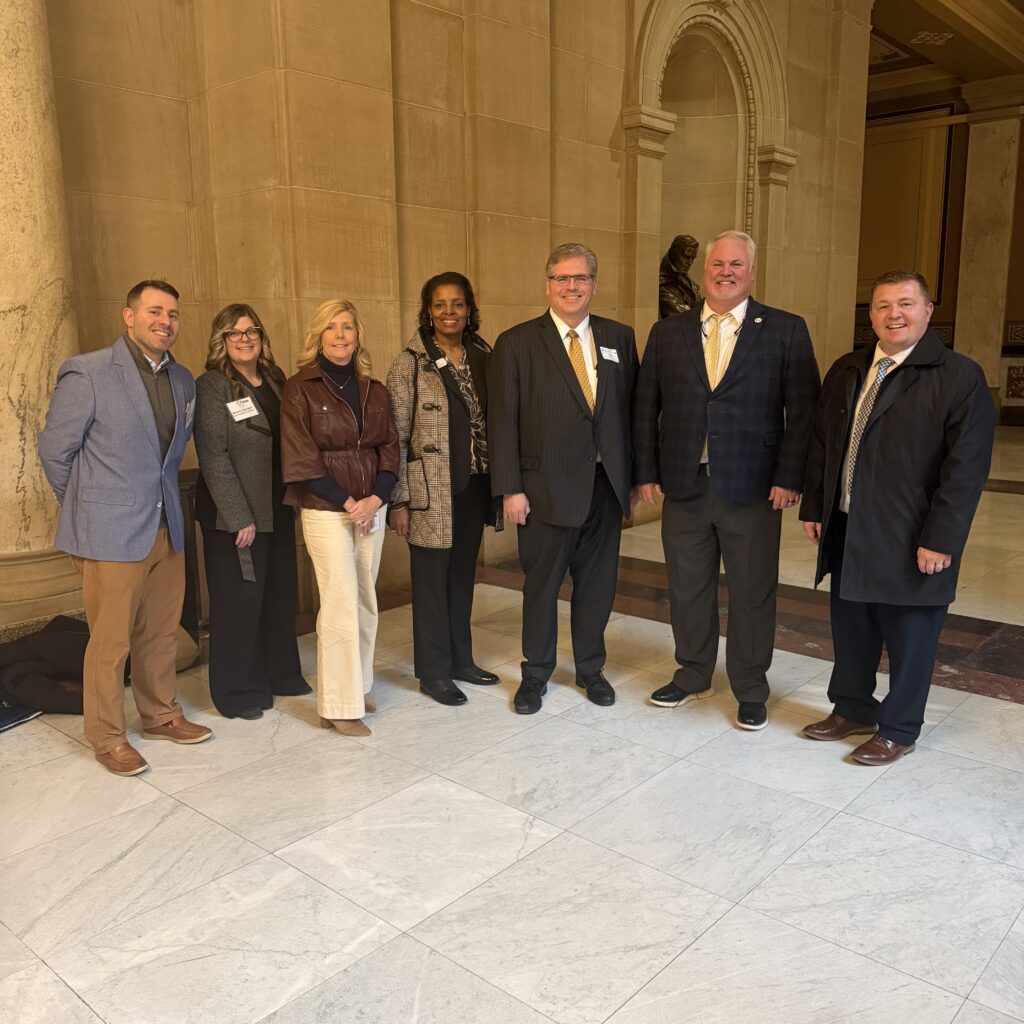
              Our Advocacy Committee visited the statehouse!  

              Last week, our Advocacy Committee visited the statehouse and state officials to advocate for the priorities that impact our region. The visit to the statehouse is an opportunity for our Advocacy Committee to advocate and learn about bills that are currently under review and how that influences our region. 

              If you are interested in understanding local priorities, you can also register for our upcoming 5 O’clock Network at Indiana-American Water Company for our annual “Meet Your Local Elected Officials.” You can register here.  


              We are continuing to learn and monitor policies that may impact our local region. The goal of our Advocacy Agenda is to articulate the opportunities and concerns of Southern Indiana businesses and to speak for them as one voice. 

              We encourage everyone to see upcoming deadlines

              Bills we are monitoring: 


              SB 76 Immigration matters  

              Status: 

              • 2/03/2026: Committee report: amend do pass, adopted 
              • 1/28/2026: First reading: referred to Committee on Judiciary 
              • 1/27/2026: Referred to the House 
              • 1/27/2026: Representative Bascom added as cosponsor 
              • 1/26/2026: Senator Koch added as coauthor 


              SB 281 Income tax credits 

              Status: 

              • 2/05/2026: Representative Snow added as cosponsor 
              • 2/05/2026: Representative Lopez added as sponsor 
              • 2/05/2026: Representative Snow removed as sponsor 
              • 2/2/2026: First reading: referred to Committee on Ways and Means 


              SB 283 Regional Development Tax Credit 

              Status: 

              • 1/12/2026: First reading: referred to Committee on Tax and Fiscal Policy 
              • 1/12/2026: Authored by Senators Mishler, Niezgodski 
              • Did not advance; Inactive. 


              HB 1101 Regional Economic Development 

              Status: 

              • 1/05/2026: First reading: referred to Committee on Ways and Means 
              • 1/05/2026: Coauthored by Representatives Snow, Lehman 
              • 1/05/202: Authored by Representative Heine 
              • Did not advance; Inactive. 


              HB 1164 Tax Increment Financing Districts 

              Status: 

              • 1/05/2026: First Reading: referred to Committee on Ways and Means 
              • 1/05/2026: Authored by Representative Rowray 
              • Did not advance; Inactive. 


              HB 1333 Land use and development 

              Status: 

              • 2/05/2026: First reading: referred to Committee on Utilities 
              • 2/03/2026: Referred to the Senate 
              • 2/02/2026: Senate sponsors: Senators Koch Doriot 
              • 2/02/2026: Third reading: passed; Roll Call 195 
              • Yeas: 54 
              • Nays: 45 


              Bills we support: 


              HB 1018 School age childcare 

              Status: 

              • 1/26/2026: First reading: referred to Committee on Family and Children Services 
              • 1/23/2026: Referred to the Senate 
              • 1/22/2026: Senate sponsors: Senators Donato, Walker G 
              • 1/22/2026: Third reading: passed; Roll Call 65 
              • Yeas: 93 
              • Nays: 0 


              HB 1177 Child care assistance 

              Status: 

              • 2/05/2026: First reading: referred to Committee on Tx and Fiscal Policy 
              • 2/03/2026: Referred to the Senate 
              • 2/02/2026: Cosponsor: Senator Charbonneau 
              • 2/02/2026: Senate Sponsors: Senators Buchanan, Clark, Goode 
              • 2/02/2026: Third reading: passed; Roll Call 172: 
              • Yeas: 80 
              • Nays:0 


              Bills we oppose: 


              HB 1104 Nondisclosure Agreements in Economic Development 

              Status: 

              • 1/12/2026: Representative Commons added as coauthor 
              • 1/05/2026: First reading: referred to Committee on Government and Regulatory Reform 
              • 1/05/2026: Authored by Representative Greene 
              • Did not advance; Inactive. 


              You can find a copy of the 1si 2026 Advocacy Agenda by visiting https://1si.org/advocacy/ or downloading a PDF copy here.   
              Building Today’s Manufacturing Workforce: Skills That Matter

              Submitted by Ivy Tech Community College

              Manufacturing is evolving faster than ever—and so are the skills required to succeed in today’s industrial environment. At Ivy Tech Community College, we are committed to meeting this moment by delivering high-impact training and strong career connections that prepare employees and students for the growing demands of modern manufacturing.

              While technical expertise remains essential, employers consistently tell us that professional skill development is in higher demand than ever. Leadership, communication, teamwork, problem-solving, and project management skills are no longer “nice to have”—they are critical to productivity, safety, and long-term growth on the shop floor and beyond.

              Ivy Tech removes the barriers that often prevent employers from launching effective training initiatives. We bring the training to you, customize curricula to meet your organization’s specific needs, and work with your team to schedule training at the most convenient times. Professional development offers long-term value by helping organizations level-set new managers and prepare employees for greater responsibility—making it a vital component of strategic workforce planning.

              In parallel, Ivy Tech continues to deliver industry-relevant technical training aligned with the needs of today’s manufacturers. Our hands-on programs cover a wide range of in-demand disciplines, including:

              • Electrical and industrial electrical systems
              • Programmable Logic Controllers (PLC)
              • Hydraulics and pneumatics
              • Welding and other core manufacturing technologies

              These programs are developed in collaboration with industry partners and emphasize applied learning that translates directly to workplace performance.

              Beyond training, Ivy Tech serves as a key career connection hub for Indiana manufacturers. We connect employers with students for job placement, internships, and apprenticeships—helping companies build talent pipelines early and efficiently. Employers are also encouraged to visit our Advanced Manufacturing campus to see students in action, meet our Dean and instructors, and learn how our programs align with real-world workforce needs. Building relationships early is one of the most effective ways to secure local talent and keep it in the region.

              Ivy Tech also offers tools to help employers fill immediate workforce needs. Through our HIRE IVY network, employers can post job opportunities reaching more than 205,000 current Ivy Tech students statewide, along with a broad alumni network.

              As manufacturing continues to modernize, success depends on a workforce that combines technical expertise, leadership capability, and adaptability. Ivy Tech Community College is a trusted partner for Indiana manufacturers, and we are eager to support your workforce needs—today and into the future.

              Take the next step and partner with Ivy Tech to build the workforce your business needs to thrive.

              CLICK HERE:   Ivy Tech Workforce/Career Interest Form

              Employer Consultants:

              Delana Roederer  (droederer1@ivytech.edu)

              Christy Ralston (cralston20@ivytech.edu)

              The Mustard Seed Announces Valentine’s Giveaway to Support Survivors of Childhood Sexual Abuse

              Southern Indiana — February 2026 — This Valentine’s season, The Mustard Seed is inviting the community to share love with purpose through a special in-store Valentine’s Giveaway taking place at all three Mustard Seed thrift store locations in Floyds Knobs, Sellersburg, and Corydon, Indiana.

              The giveaway is designed to both thank shoppers for their generosity and visibly demonstrate community support for survivors of childhood sexual abuse — the heart of The Mustard Seed’s mission.

              During the giveaway period, any shopper who chooses to round up their purchase or make a monetary donation at checkout will receive a paper heart. Shoppers are invited to write their name on the front and their contact information on the back of the heart, which will then be displayed in-store as a public show of support for survivors.

              At the close of business on Saturday, each Mustard Seed location — Floyds Knobs, Sellersburg, and Corydon — will randomly select one heart, resulting in three total winners. Each selected participant will receive a $100 Mustard Seed gift card. Winners will be contacted directly the following Monday.

              All funds raised through round-ups and donations help The Mustard Seed continue its mission of connecting survivors to healing resources, including trauma-informed counseling and other supportive services.

              The Valentine’s Giveaway will take place at all Mustard Seed thrift store locations in Floyds Knobs, Sellersburg, and Corydon, Indiana. Community members are encouraged to stop in, shop with purpose, and help fill the stores with hearts — both on the walls and in action.

              For more information about The Mustard Seed or its mission, visit www.themustardseedthrift.com or follow along on social media.

              About The Mustard Seed
              The Mustard Seed is a nonprofit organization dedicated to connecting survivors of childhood sexual abuse to healing resources through funding, education, and prevention. The organization is primarily funded through its thrift stores located in Southern Indiana.

              Media Contact:
              Elle Fleenor
              Director of Marketing, Media, & E-Commerce
              The Mustard Seed
              elle@mustardseedthrift.com
              (812) 595-4183

              Are Green Shoots Starting to Emerge After a Three-Year Manufacturing Drought?

              Submitted by Uric Dufrene, Ph.D., Sanders Chair in Business, Indiana University Southeast


              Since October 2022, the ISM Manufacturing Index has been above 50 only once, a January reading that barely cleared the expansion threshold. Higher interest rates were the initial culprit behind the sector’s decline, followed more recently by tariffs, or at least the threat of tariffs. Regardless of the cause, manufacturing has remained in contraction territory for an extended period.

              For manufacturing-rich regions such as Louisville Metro, Indiana, and Kentucky, this prolonged slowdown has mattered. Recent economic data, however, suggest the sector may be on the cusp of expansion, improving the outlook for these regions.

              The latest encouraging signal comes from the ISM Index itself. The Institute for Supply Management’s monthly reading rose to 52.6, not only above 50 but also higher than the prior month and stronger than anticipated. Key subcomponents showed that both new orders and production moved into expansion territory, pointing to a more favorable near-term outlook.

              The employment subindex also improved from the prior month, but it continues to signal contraction, now for 36 of the past 37 months. As we’ve discussed in prior columns, economic expansion does not necessarily translate into labor growth. The latest ISM report reinforces that view.

              This divergence between growth and hiring helps explain recent productivity gains. The latest data show that unit labor costs declined by nearly 2 percent in the most recent quarter, while productivity rose by almost 5 percent. Workers are producing more output, and doing so more efficiently, which is helping to drive unit labor costs lower. These productivity gains, driven largely by investments in capital goods, support profitability while also helping to keep inflation in check.

              The groundwork for these gains was laid years ago. In 2021, the economy experienced a near-gargantuan surge in industrial machinery investment, the largest one-year increase in more than three decades. Coming out of the pandemic, job openings far exceeded the number of available workers. Employers were forced to pivot, relying more on capital than labor simply because labor was scarce.

              We are now beginning to see the payoff from those capital investments made five years ago. Some will attribute today’s productivity gains to artificial intelligence, but the shift toward capital-intensive production was set in motion well before AI became the latest headline. Growth in manufacturing accompanied by limited labor growth is likely to persist. Any reshoring of manufacturing back to the U.S. will require a competitive cost structure, and that means even more investment in automation, or capital over labor.

              Productivity gains will be a key factor influencing the next Federal Reserve chair and could help justify additional rate cuts later this year, beyond what markets currently anticipate.

              Turning to the labor market, the February employment report was delayed due to the brief government shutdown. The latest private-sector ADP report showed continued softness in hiring, with just 22,000 jobs added, well below expectations of 50,000. At the same time, unemployment claims remain at historically low levels, suggesting layoffs are not accelerating, despite recent high-profile announcements. Job openings, however, saw a steep decline from the prior month, hitting the lowest level since the Covid year. The job creation engine of the U.S. economy continues to sputter.

              Closer to home, preliminary estimates suggest Louisville Metro will finish the year roughly flat in terms of job growth. The largest declines were seen in leisure and hospitality, which shed about 3,000 jobs, followed by transportation and warehousing, down roughly 2,000. The largest gains were in education and health services, and primarily healthcare, which added about 1,000 jobs.

              As we start 2026, green shoots appear to be emerging in both manufacturing and the service side of the economy. Job growth may not fully reflect that improvement, which helps explain why the Federal Reserve may ultimately cut rates more aggressively than the two reductions currently priced into markets.

              Louisville Muhammad Ali International AirportCelebrates Another Year of Success

              Airport experienced Top 3 busiest year ever, remained a global leader in cargo operations and investment progressed on SDF Next Program

              Louisville, KY (February 5, 2026) – The Louisville Muhammad Ali International Airport(SDF) marked another year of success in 2025 including celebrating its third busiest year for passenger traffic following its top two record years in 2023 and 2024. Last year, 4.59 million total passengers flew in or out of SDF with Sunday, May 4, 2025 (the day after the Kentucky Derby) serving as the airport’s busiest day yet with 18,500 departing seats.


              In 2025, a total of 19 nonstop routes increased their capacity throughout the year while eight of these were by double-digits. Eight airlines continue providing service to more than 40 nonstop destinations from Louisville, including last year’s launch of service to Nashville (BNA) on Southwest Airlines that provides convenient connections to more than 75 cities across the country.


              “Passenger figures remained consistently strong throughout last year,” said Dan Mann, Executive Director of the Louisville Regional Airport Authority, which owns and operates SDF. “To experience three consecutive years of record-setting growth, all of which mark the highest passenger totals in SDF’s history is a testament to the community’s support and the robust air service options available to travelers at our airport.”


              SDF Next Program Investment
              Progress continues on the SDF Next Program, a comprehensive capital improvement initiative that will see more than $1 billion invested in the airfield and Jerry E. Abramson Terminal. To date, more than $364 million in projects have been completed with more than $565 million in additional investment expected between now and 2028.


              Terminal highlights from 2025 include progress on the new security checkpoint expansion, a 30,000 square feet addition with 10 passenger screening lanes that will house the latest technology is scheduled to be operational by early 2027. On the airfield, the first phase of Taxiway B reconstruction was completed along with various electrical upgrades and pavement rehabilitation to areas of SDF’s runways and taxiways.


              Looking ahead to 2026 in the terminal, nearly $70 million in significant improvements to the post-security area along Concourses A and B just recently kicked off that include mechanical upgrades, skylight replacement and an overhaul of all gate waiting areas. On the airfield, reconstruction of both Taxiways B and D are expected, totaling $40 million in investment to improve operational efficiencies for aircraft.


              Global Leader in Cargo
              Cargo operations at SDF remained strong last year as home of UPS Worldport, the center point of their global air network. The airport also set another record for its busiest year for cargo operations with nearly 7.5 billion pounds of cargo handled in 2025, besting the previous year by more than 13%. With this record, it’s believed that SDF will likely be the no. 1 busiest airport for cargo operations in North America and remain within the Top 5 in the world. Airports Council International World is expected to release its preliminary World Airport Traffic Report in the Spring with updated rankings for 2025.


              An Economic Engine for the State
              The Airport Authority including SDF and Bowman Field, the crucial general aviation reliever airport for the community, continue to be the no. 1 economic powerhouse for aviation in the state. Each year, airport and airport-related activities generate $12.8 billion in economic impact and $550 million in state and local tax revenue, or $1 in every $6 in Louisville Metro tax revenue. Plus, nearly 90,000 jobs – or 1 in 8 jobs in Louisville Metro – can be attributed to airport operations.


              “SDF is leading the way for our community, our region and the state,” added Mann. “We continue to be a major economic driver, global leader in cargo operations and set new passenger records. We are well positioned to continue this momentum into 2026 for another successful year.”


              | Media Materials |
              Defying Expectation Presentation from Executive Director Dan Mann during his annual Year-End Briefing.


              SDF Fact Sheet 2025


              About Louisville Muhammad Ali International Airport (SDF)
              Owned and operated by the Louisville Regional Airport Authority, the Louisville Muhammad Ali International Airport (SDF) is the state’s premier airport, serving more Kentuckians annually than any other airport in the Commonwealth. Eight commercial passenger airlines offer nonstop service to more than 40 nonstop destinations from Louisville. SDF is home to UPS Worldport, moving millions of tons of products each year, making it the no. 1 busiest cargo airport in North America and Top 5 in the world. Aviation is an economic powerhouse for the region that generates $12.8 billion in economic impact every year. One in 8 jobs is generated by SDF and Bowman Field and their aviation partners. Visit www.FlyLouisville.com to learn more.

              Contact: Natalie Chaudoin
              (502) 363-8507 office
              (502) 475-8084 cell
              Natalie.Chaudoin@FlyLouisville.com